Excel and spreadsheets
Enable Excel on Ordify Productivity in Edit Agent → Integrations. Describe the spreadsheet you need in chat and get a ready-to-use .xlsx file. Files open in Excel or Google Sheets — Ordify does not include a Google Sheets add-in.
Why use Excel and spreadsheets
- Ready to open: Get a formatted workbook, not a table dumped into chat.
- Edit in conversation: Follow-up requests update the same file instead of starting over.
- From your data: Attach a CSV or an existing spreadsheet, or point the agent at a file in Drive.
What you can do
- Create a new spreadsheet from a description or attached data
- Edit an existing
.xlsxfrom chat, an attachment, or Drive - Follow-up edits ("add a total row", "rename that section") update the same file
- Multiple sheets, working formulas, and charts
- Professional formatting: styled headers, fitted columns, frozen header row
How it works
- Enable Excel on Ordify Productivity.
- Describe the spreadsheet in chat, or attach data you want turned into a workbook.
- The agent returns a
.xlsxfile. - Follow-ups such as "add a total row" update that same file.
Getting started
- Find the agent in your Library or sidebar and click Edit.
- Open the Integrations tab.
- Under Apps, tick Ordify Productivity. It is marked Built-in — there is no connect step.
- On the right, tick Excel. Leave tools this agent does not need off.
- Click Save Changes.
- Open chat and describe the spreadsheet you need.
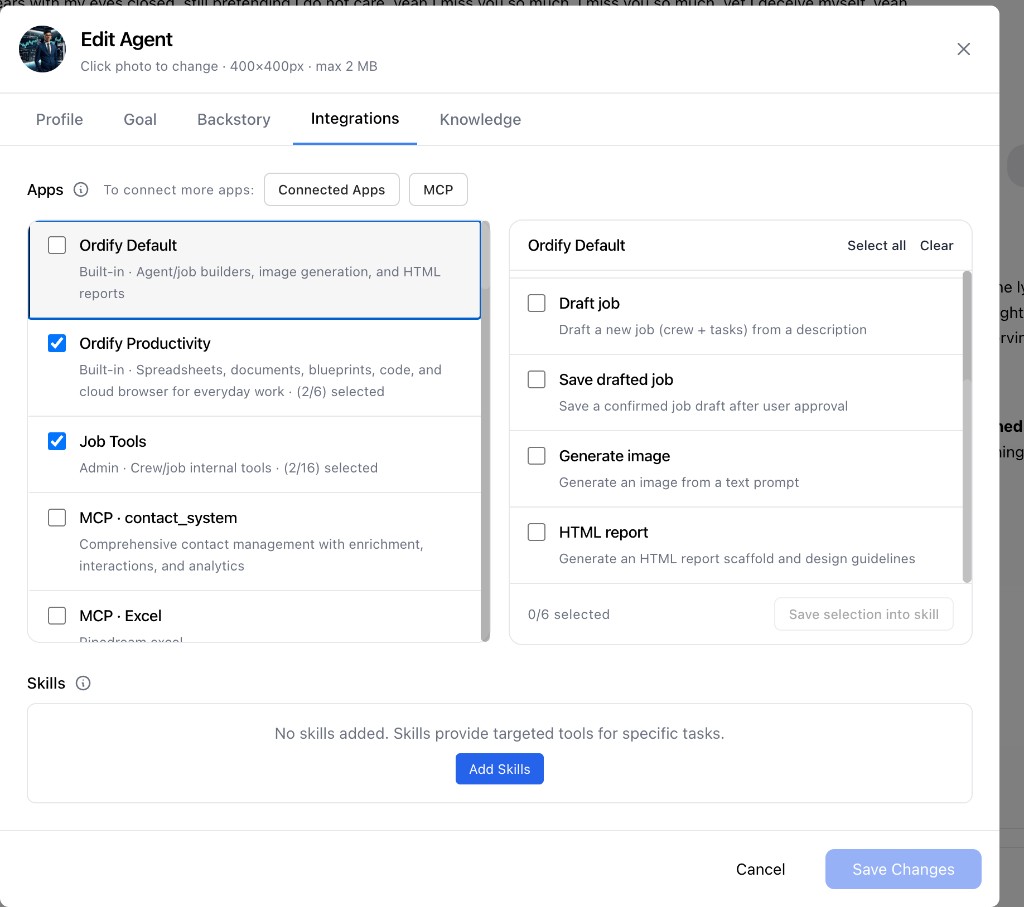
Ticking Excel is enough. You do not also need to tick Code.
Files land in the Drive and can be previewed in chat.
Example
Ask in chat after Excel is enabled:
- "Create an Excel workbook with a Sales sheet and a Returns sheet from this CSV."
- "Add a total row and freeze the header on the spreadsheet you just made."
- "Turn this attached export into a formatted forecast with a chart."
Use cases
- Operations: Build a weekly capacity sheet from a description or an attached roster, then add a total row in a follow-up.
- Finance: Turn last month's export into a formatted forecast with a chart.
- Analytics: Clean a messy export into a multi-sheet workbook with working formulas.
What's next
- Word and documents — create and edit
.docxfiles in chat - Previewing files — open a spreadsheet beside the conversation
- Drive — store and reopen files the agent creates
- Browser — open live pages and capture screenshots
- Create and edit files — Search, Code, and the file-tools overview